Tampilkan postingan dengan label temperature. Tampilkan semua postingan

Selasa, 28 Februari 2012

Clouds Closer to Earth


Chicken Licken was right, the sky really is falling. Nasa satellite data has shown that the Earth's cloud tops have been lowering over the last decade.


 Cloud-top height fell one percent on average between March 2000 and February 2010, according to measurements from the multi-angle imaging spectroradiometer mounted on Nasa's Terra satellite. That one percent means a reduction of 30 to 40 metres in the average maximum height of clouds, during the 00s.

While the short record means it's difficult to draw any strong conclusions from the data, it does hint towards a longer-term trend. Roger Davies, the lead researcher on the project, warns that it's something that should be monitored in the coming decades to determine how significant it is for global temperatures.


If there is indeed a consistent reduction in cloud height, and this isn't just natural variability, then Earth would begin cooling to space more efficiently, reducing the surface temperatures and slowing the effects of climate change. 

.........................................................................................................................................................
..........................................................................................................................................................

"We don't know exactly what causes the cloud heights to lower," says Davies. "But it must be due to a change in the circulation patterns that give rise to cloud formation at high altitude." The Terra spacecraft, which launched in 1999 and records three-dimensional images of clouds around the globe, will continue gathering data in the coming years.

Sabtu, 22 Oktober 2011

Discovery of how Water was Present on Earth and Mars


The discovery of the mineral jarosite in rocks analyzed by the Mars Rover, Opportunity, on the Martian surface had special meaning for a team of Syracuse University scientists who study the mineral here on Earth. Jarosite can only form in the presence of water. Its presence on Mars means that water had to exist at some point in the past. The trick is in figuring out if jarosite can be used as a proxy for determining when, and under what conditions, water was present on the planet.

The SU scientists have done just that. In a recent study published in an October issue issue of Earth and Planetary Science Letters, Suzanne Baldwin, professor of Earth Sciences in SU's College of Arts and Sciences; and Joseph Kula, research associate and corresponding author for the study, established the "diffusion parameters" for argon in jarosite. In simpler terms, they discovered a way to use the noble gas argon, which accumulates in jarosite over time, to determine the age of the mineral and the surface conditions under which it formed.


The discovery of the mineral jarosite in rocks analyzed by the Mars Rover, Opportunity, on the Martian surface had special meaning for a team of Syracuse University scientists. (Credit: NASA)
                                                                    
The new study is the first in a series of experiments designed to provide a roadmap of sorts for scientists who may someday study Martian samples brought back to Earth. "Our experiments indicate that over billion-year timescales and at surface temperatures of 20 degrees Celsius (68 degrees Fahrenheit) or colder, jarosite will preserve the amount of argon that has accumulated since the crystal formed," Kula says, "which simply means that jarosite is a good marker for measuring the amount of time that has passed since water was present on Mars."

Moreover, since the development of life requires water, knowing when and for how long water was present on the Martian surface has implications for the search for potential habitats harboring life, the scientists say. "Jarosite requires water for its formation, but dry conditions for its preservation," Baldwin says. "We'd like to know when water formed on the surface of Mars and how long it was there. Studying jarosite may help answer some of these questions."


Jarosite is a byproduct of the weathering of rocks exposed at the surface of a planet (such as Earth and Mars). The mineral forms when the right mixture of oxygen, iron, sulfur, potassium and water is present. Once formed, the crystals begin to accumulate argon, which is produced when certain potassium isotopes in the crystals decay. Potassium decay is a radioactive process that occurs at a known rate. By measuring the isotopes of argon trapped within the crystals, scientists can determine the age of the crystals.


However, because argon is a gas, it can potentially escape rapidly from the crystals under hot conditions or slowly over long durations at cold conditions. In order to determine the reliability of the "argon clock" in jarosite, the scientists had to determine the temperature limits to which the crystals could be subjected and still retain the argon. Using a combination of experiments and computer modeling, the team found that argon remains trapped inside the crystals for long periods of time over a range of planetary surface temperatures.

"Our results suggest that 4 billion-year-old jarosite will preserve its argon and, along with it, a record of the climate conditions that existed at the time it formed," Baldwin says. The scientists are in the process of conducting further studies on jarosite that formed less than 50 million years ago in the Big Horn Basin in Wyoming, which they hope will reveal when the minerals formed and how fast environmental conditions changed from water-saturated to dry. The results can be used as a context for interpreting findings on other planets.


Baldwin and Kula are members of the NASA-funded New York Center for Astrobiology at Rensselaer Polytechnic Institute in Troy, N.Y. The center is one of 10 such centers nationally that are part of the NASA Astrobiology Institute, located at NASA's Ames Research Center at Moffett Field, Calif. Their jarosite research is funded by NASA.
 by "environment clean generations"

Kamis, 20 Oktober 2011

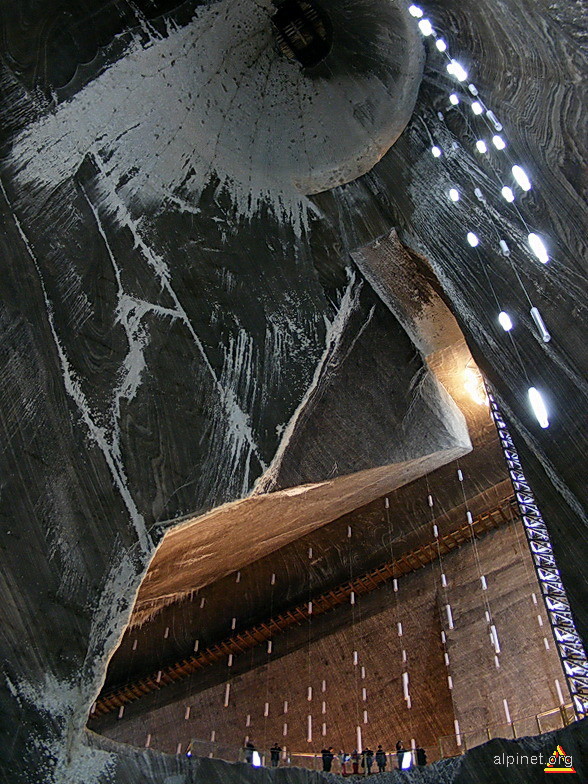
The Wonderful Salt Mine from Turda, Transylvania


A day trip to Turda Salt Mine is a must for any visitor to Cluj-Napoca, Romania. One of the most important salt mines in Transylvania, Turda Salt Mine has been known since ancient times, but was put into operation for underground mining work during the Roman period.


The Salt Mine is mentioned in official documents from the middle of the 13th century, when the mine was offered to the Transylvanian Catholic Church leaders. In the Middle Ages, Turda was one of the biggest places of salt extraction in entire region.

The salt was extracted as clods which were then cut by specialist workers. The mines were lit by candles and tallow rush lights; explosives were never used for exploitation nor mechanical equipment used for cutting the salt.
The microclimate in the mine is characterised by yearly variations of temperature between 11 – 12° C; the average humidity level inside is 80% and the air pressure is between 747-752 mm Hg.


The lack of pathogen bacterium and a moderate air ionisation is therefore favorable to breathing treatments.
By its impressive galleries, long tunnels and mining system, great accoustics and very healthy microclimate, Turda Salt Mine is an excellent destination for every tourist.

Environment-Clean-Generations


Batman 3 Movie may be filmed in this salt mine! The Batcave may be getting a green facelift. The Dark Knight Rises Rumors site reports that in one of the most exciting adaptive re-use projects to date, Transylvania's old Salina Turda Salt Mine could be Christopher Nolan's location of choice for the latest Batman movie to be released next summer.

 Christian Bale will come to film Batman 3 to Romania. Nolan unofficially visited what is now a popular tourism site in Romania last January, while producers on the project met with Bucharest officials to discuss the potential of filming. Although an interior set is also being built at Warner Bros.' studios in Los Angeles, the salt mine's futuristic lighting and gnarly infrastructure are already fit for a Batman location, obviating the need to use more resources for the film. That is, if we can believe what we read. Check out photos of the enigmatic salt mine after the jump and let us know if you think this is a good location for The Dark Knight Rises.

Originally exploited by the Romans, the Salina Turda Salt Mine’s history dates back to at least the middle of the 13th century. And even as a mine, it was a fairly sustainable operation given that no mechanical devices were ever used to cut the salt clods harvested, nor were dynamites exploded. After a series of takeovers, the mine was shut down, but opened again as a tourism destination in 1992.
This is an excellent site for Nolan – not just because it’s a cool set in itself that needs very little intervention – but also because it has a stable microclimate. Temperatures remain steady at between 11 and 12 degrees Celsius, though at 75-80%, humidity levels are usually pretty high. And we couldn’t help but notice that the cave is in Transylvania, a cozy spot for bloodsucking vampires. With his new green cape, Batman is sure to prevail.


by "environment clean generations"

Rabu, 19 Oktober 2011

Sea Levels Rising for 500 Years?


Rising sea levels in the coming centuries is perhaps one of the most catastrophic consequences of rising temperatures. Massive economic costs, social consequences and forced migrations could result from global warming. But how frightening of times are we facing? Researchers from the Niels Bohr Institute are part of a team that has calculated the long-term outlook for rising sea levels in relation to the emission of greenhouse gases and pollution of the atmosphere using climate models.


The results have been published in the scientific journal Global and Planetary Change.

"Based on the current situation we have projected changes in sea level 500 years into the future. We are not looking at what is happening with the climate, but are focusing exclusively on sea levels," explains Aslak Grinsted, a researcher at the Centre for Ice and Climate, the Niels Bohr Institute at the University of Copenhagen.


Model based on actual measurements


He has developed a model in collaboration with researchers from England and China that is based on what happens with the emission of greenhouse gases and aerosols and the pollution of the atmosphere. Their model has been adjusted backwards to the actual measurements and was then used to predict the outlook for rising sea levels.


The research group has made calculations for four scenarios: a pessimistic one, an optimistic one, and two more realistic ones.

In the pessimistic scenario, emissions continue to increase. This will mean that sea levels will rise 1.1 meters by the year 2100 and will have risen 5.5 meters by the year 2500.


Even in the most optimistic scenario, which requires extremely dramatic climate change goals, major technological advances and strong international cooperation to stop emitting greenhouse gases and polluting the atmosphere, the sea would continue to rise. By the year 2100 it will have risen by 60 cm and by the year 2500 the rise in sea level will be 1.8 meters.


For the two more realistic scenarios, calculated based on the emissions and pollution stabilizing, the results show that there will be a sea level rise of about 75 cm by the year 2100 and that by the year 2500 the sea will have risen by 2 meters.


Rising sea levels for centuries


"In the 20th century sea has risen by an average of 2mm per year, but it is accelerating and over the last decades the rise in sea level has gone approximately 70% faster. Even if we stabilize the concentrations in the atmosphere and stop emitting greenhouse gases into the atmosphere, we can see that the rise in sea level will continue to accelerate for several centuries because of the sea and ice caps long reaction time. So it would be 2-400 years before we returned to the 20th century level of a 2 mm rise per year," says Aslak Grinsted.

He points out that even though long-term calculations are subject to uncertainties, the sea will continue to rise in the coming centuries and it will most likely rise by 75 cm by the year 2100 and by the year 2500 the sea will have risen by 2 meters.
 by "environment clean generations"

Selasa, 11 Oktober 2011

The Virgin Space Ship


Virgin Galactic just keeps on ticking off the milestones on its way to becoming the first commercial company to take tourists on high-altitude flights to suborbital space and return them safely through the atmosphere to Earth. In the video below, we actually get to see Virgin’s SpaceShipTwo (aka VSS Enterprise) making its first “feathered” flight.

 “Feathering,” as it is known, is probably the biggest innovation integrated into SpaceShipTwo’s design. In the feathered position, the entire tail section of the plane rotates upward about 65 degrees, creating a different aerodynamic shape that is highly stable yet creates tremendous drag to slow the aircraft down during re-entry. Though that drag is pretty significant, the light weight of the aircraft keeps the skin temperature from rising too high, circumventing the need for heat shields and other thermal protection. 

Moreover, when feathered correctly the aircraft is so stable that the pilot can more or less take his hands off the sticks and let the aircraft work its way through the atmosphere naturally, based purely on its aerodynamic shape. That’s a huge safety feature, as the pilot doesn’t have to maintain a specific degree of entry or rely on a sophisticated fly-by-wire computer.


The test shown below took place May 4 and did not actually include a trip to space. But this first feathering test, which began when SpaceShipTwo was dropped from the carrier aircraft WhiteKnightTwo at 51,500 feet, proves that Burt Rutan’s feathering design actually works as well in the air as it did on paper. Where you see the aircraft feather, keep in mind that it is basically falling straight down at 15,500 feet per minute, a rate that is slowed significantly by the aerodynamic drag generated by the feathering configuration.


by "environment clean generations"

Jumat, 07 Oktober 2011

What if i Nuked a Volcano


Internet lore and science fiction tales suggest that dropping a nuclear weapon on an erupting volcano would halt the eruption. But would that really be the case? Would it just make the eruption worse by opening up more magma tubes? Would it alter the lava flows? Would it send reverberations through the earth's core and crack the world in half (as suggested by the 1965 classic, Crack in the World)? Since no country is likely to drop a nuclear bomb on a volcano in the near future (well, at least Italy and the U.S. didn't take that train of advice with Mount Etna), let's take a look at the possibilities for what might really happen, to the best of our scientific knowledge. 

Where do we put the nuclear device?
I'll present two options for the placement of the nuclear device – 1) the base of the volcano, causing an explosion to give the magma another place to go, and 2) the mouth of the volcano, caving in or sealing off the opening of the volcano, or in a more extreme case, turning the volcano from a pimple on the crust of the earth to a crater. Also, we'll not specify which type of nuclear weapon being used, as an A, H, or neutron bomb should all have the same general characteristics (extreme heat and an air burst) in the early stages, which are what we'll be concerned with. We'll let later generations deal with the radioactive fallout.

Magma vs. Nuclear Fission – What Wins?
 
The temperature at the core of the nuclear detonation could be as much as several million degrees Celsius. This temperature would fall off with distance, but would still be over 6000 degrees Celsius dozens of meters away. This temperature would decrease quickly, and be followed by a shock wave. Magma (and once it is exposed to the air, lava), on the other hand, is typically 600 – 1300 degrees Celsius and mainly composed of silicon dioxide, with this also being the approximate temperature at the mouth of a volcano. Silicon dioxide boils at around 4000 degrees Celsius. The nuclear blast should provide a sufficient temperature to boil the magma, vaporizing it along with enough heat to cause a phase transition of the surrounding rock to vaporize it as well.

Logistics

There is a logistical issue with the nuclear detonation, however. One would have to ensure that the fission reaction within the nuclear warhead occurred prior to it coming in contact with the lava, which would likely melt the warhead and the radioactive material inside and prevent a full detonation. Also, a detonation that happens too early and too high above the volcano would only result in an air blast rushing onto the volcano. This delicate timing situation would call for remote detonation, as the surface tension of the lava will doubtfully be considerable enough to initiate detonation.

What happens after the initial explosion?
 
So, we probably have enough heat to vaporize a fair amount of the magma and rock making up the volcano. If the nuclear device is placed at the base of the volcano, the first of the two possibilities we'll look at, the heat accompanying the blast and the following air burst would likely bore a hole into the side of the volcano, if only for a moment prior to a cave in, alleviating pressure on the magma chamber. This would allow more magma to flow out afterward. With careful placement, this would prevent an "unplanned" eruption and at the same time causing an eruption in an alternate direction that would be somewhat controlled.

If the nuclear device is detonated at the opening of the erupting volcano, the lava and a portion of the protruding side wall would likely be vaporized. This is where the variables come into play. Previous test explosions, like the 1962 Sedan nuclear test (which aimed to use nuclear weapons in large scale earth moving), formed a crater approximately 100 meters deep and 400 meters wide (an image of the crater can be seen above). 

If the detonation occurred with enough force, it could possibly extend its force down to the magma chamber and "plug" the chamber, halting eruption. However, taking into account the amount of material moved in the Sedan test and comparing it to the height of a volcano (often several thousand meters high), this would seem highly unlikely. A blast at the mouth of the volcano would likely just crush part of the top of the volcano. Even if the blast was strong enough the pressure in the magma chamber would have been alleviated temporarily, but I would think it would be likely return over time, causing another volcanic event. The evil magma just has to get out.

Cracking the world in half and controlled eruptions
 
While we're on the subject of the uncanny and since I mentioned the idea of cracking the earth in half earlier, the earth's diameter is just too large as well to reach a point where cracking would occur in the later air blast – the depth of blast penetration is not sufficient, and the area underneath the surface of the volcano is substantially magma, which would help distribute the heat from the blast over time. This might work in the case of a small planetoid object or a rock in space with volcanic activity, but the Earth is just too large to crack in two.

Either way, I'm not sure you could stop an eruption by using a well-placed nuclear device – you would simply allowing magma to seep forth and go in another direction and hasten an eruption. Both detonation methods, however, could be used for a situation where a controlled eruption was desired, but there are too many unknown variables to sufficiently diagram what would happen in the moments following the initial blast.

  We've got heat and a blast, but how do we clean this up?
 
And this is the million dollar question. Volcanoes are known to put enough ash into the atmosphere to alter temperatures in parts of the world, and when accompanied by a nuclear blast, there would be considerably more ash, and this time it would be radioactive. This part of the aftermath, in itself, would be reason enough to steer clear of using nuclear devices to halt (if possible) or control an eruption. The accompanying lava flow could also be radioactive, but no one has been crazy enough to try this, so I'd argue that only the leading edge of the post-blast lava flow would be radioactive, as more magma would come to the surface and renew the lava flow.

Has anyone bombed a volcano before?
 
Conventional bombs have been used to divert lava flow, as the US Air Force did with flows emanating from the Mauna Loa volcano in Hawaii, sufficiently diverting the lava flow away from the city of Hilo. The results were published as Diversion of lava flows by aerial bombing - lessons from Mauna Loa volcano, Hawaii in 1980. Using convention bombs to disrupt volcanoes in Japan was suggested by a Colgate University Geology professor as a means of hastening the end of WW II as well. The idea hinged on causing a string of eruptions that would devastate Japanese several cities and was published in a 1944 Popular Science article.

Nuclear devices don't appear to be an option to halt an eruption, just an option by which to cause an eruption. So, if you want to see someone take a nuclear warhead to the crust of the earth, check out this clip from the 1965 hit, Crack in the World, and be glad we don't make movies like this anymore. Wait, I just said this as a person who went to see Armageddon twice in the theaters and own the Criterion DVD version. Let's just keep nuclear weapons away from volcanoes (even if your intentions are solely humanitarian), ok?

Rabu, 28 September 2011

Extremophiles On Top Of All


A trove of unique extremophiles were found at the bottom of the 7,800 foot-deep Homestake Gold Mine in Lead, S.D. 

  • They don't need oxygen or sunlight and can survive acid baths and doses of radiation that would kill other organisms.
  • With concerns over food security, and new mandates to use more biofuels, researchers are ramping up their efforts to find new ways to turn plant material into fuel.
  • The biofuel-producing catalysts are rugged, stable and can thrive under pressure. 
Extremophiles are tiny microbes that are able to thrive in hot, salty and even acidic or gaseous environments that would kill other forms of life. Now scientists are using these hardy dwellers of the seafloor and hot springs to produce biofuels like ethanol more efficiently and at lower cost.


These heat and salt-loving microorganisms are good at breaking down biological material like wood chips, waste crops or other sorts of plant material. They also literally "take the heat" when it comes to punishing industrial processes. Until recently, researchers have had trouble culturing these wild-growing extremophiles and harnessing their properties. But recent advances have allowed them to turn them into bio-powered refineries.

"I believe they will be a big generator for energy in the near future," said Rajesh Sani, assistant professor of biological and chemical engineering at the South Dakota School of Mines and Technology. "We had some trouble at first, but in the past five years, we've learned how to culture them. Now they cooperate and grow nicely with us."


Sani found a trove of unique extremophiles at the bottom of the 4,800 foot-deep Homestake Gold Mine in Lead, S.D. The bacteria were living in the warm soil and in the fissures between the rocks at the bottom of the mine.  


"Outside it was snowing," Sani recalls. "But at the bottom of the mine it was 40 to 45 degrees C (104 to 113 F). We we're sweating."


Sani and his colleagues cultured the Geobacillus bacteria and used it to break down corn waste and cord grass from solid to liquid at nearly 160 degrees F. This fermentation process has long been used to produce biofuels -- and beer -- but now it can be done in fewer steps, using less water and smaller reactor vessels, explained Sani.


"We are trying to eliminate some steps to make it more cost effective," Sani said.

The results of the experiment were published in the August edition of the journal Extremophiles. His research and that of dozens of other scientists will be discussed at two big conferences this month in Yellowstone National Park and at the University of Georgia.

With concerns over food security, and new mandates by the US and European governments to use more biofuels, researchers are ramping up their efforts to find new ways to turn plant material into fuel. Barny Whitman, a microbiologist at the University of Georgia, says researchers are still understanding how extremophiles make enzymes under tough conditions.


"At higher temperatures, (chemical) reactions go faster and the catalysts are more stable," Whitman said. "It's generally cheaper to run (a reactor) at high temperature rather than low temp because cooling is more expensive and a lot of these reactions generate heat."

Whitman's research is focused on identifying ancient forms of life called archaeobacteria that make methane gas. He believes they could eventually be used to turn sewage or municipal waste into a usable fuel.

One of the pioneers of extremophile biotechnology is also speaking at the Georgia conference.

 Eric Mathur, vice president for research at SG Biofuels in San Diego, isolated genes from a bacteria growing on deep-sea hydrothermal vents, and then transferred the genetic material into corn plants more than a decade ago. Now he's found the ultimate extremophile -- a desert shrub called jatropha whose seeds produce a compound that is 40 percent oil. 

The firm has jatropha plantations in Guatemala, Brazil and India and is selling its jatropha-powered mixtures to European airlines that are under the gun to run on biofuel.

Mathur said researchers would do well to expand their search for biofuel-producing catalysts that are rugged, stable and can thrive under pressure.


"I look at extremophiles as a broad term to describe organisms that can survive in conditions where others can't," Mathur said. "The plants we work with now are extremophiles. They are crazy plants that live outside the window of arable land."

 by "environment clean generations"

Selasa, 27 September 2011

NASA Will Send Probe Into Sun


Nasa is to fire a space probe directly at the Sun to answer some of the most important questions about our solar system.
A small car-sized spacecraft will plunge into the sun's atmosphere approximately four million miles from its surface, exploring a region no other spacecraft has ever visited before.
The unprecedented project, named Solar Probe Plus, is scheduled to launch by 2018.

Nasa has selected five science investigations that will unlock the Sun's biggest mysteries as the probe repeatedly passes through its atmosphere.
‘This project allows humanity's ingenuity to go where no spacecraft has ever gone before,' said Lika Guhathakurta, Solar Probe Plus program scientist at NASA Headquarters, in Washington.
'For the very first time, we'll be able to touch, taste and smell our sun.' 

As the spacecraft approaches the sun, its revolutionary carbon-composite heat shield must withstand temperatures exceeding about 1,400 degrees Celsius (2,550 degrees Fahrenheit) and blasts of intense radiation.
The spacecraft will have an up-close and personal view of the sun, enabling scientists to better understand and forecast the radiation environment for future space explorers. 

‘The experiments selected for Solar Probe Plus are specifically designed to solve two key questions of solar physics - why is the sun's outer atmosphere so much hotter than the sun's visible surface and what propels the solar wind that affects Earth and our solar system? ' said Dick Fisher, director of NASA's Heliophysics Division in Washington.

'We've been struggling with these questions for decades and this mission should finally provide those answers'
NASA invited researchers in 2009 to submit science proposals. Thirteen were reviewed by a panel of NASA and outside scientists and the five selected investigations are receiving approximately $180 million for preliminary analysis, design, development and tests. 

The Solar Wind Electrons Alphas and Protons Investigation will specifically count the most abundant particles in the solar wind - electrons, protons and helium ions - and measure their properties.
The investigation also is designed to catch some of the particles in a special cup for direct analysis. 

A telescope on board will make 3-D images of the sun's corona, or atmosphere. The experiment actually will see the solar wind and provide 3-D images of clouds and shocks as they approach and pass the spacecraft.
Another will make direct measurements of electric and magnetic fields, radio emissions, and shock waves that course through the sun's atmospheric plasma.

The experiment also serves as a giant dust detector, registering voltage signatures when specks of space dust hit the spacecraft's antenna.
Another experiment from the Southwest Research Institute in San Antonio will look at elements in the sun's atmosphere using a mas  spectrometer to weigh and sort ions in the vicinity of the spacecraft. 

 by "environment clean generations"

Rabu, 21 September 2011

Greenhouses In Southern Spain Responsible For Lowering Local Temperature


The southern coast of Spain is known for hot parties, hot food, and hot people. But one thing it may soon be known for is cooling the climate. The southeastern region of Almeria is home not only to paella and flamenco but also to the world's largest expanse of greenhouses. The roofs on these "hot houses" reflect incredible amounts of sunlight – so much, in fact, that scientists now say they could be responsible for lowering the local temperature.

Today, 26,000 hectares of Almeria's semi-arid pasture land is dominated by greenhouse horticulture in a constant change-over that has been occurring since the 1970s to improve the region's agriculture.

Using satellite data, scientists from the University of Almeria identified differences in surface radiation (how much heat is emanating from the ground) and albedo (the ability to reflect sunlight) between the greenhouse-covered land and the natural, semi-arid land. Simultaneously, they compared temperature trends inside the region with those throughout Spain. 

The results showed that in Almeria, air temperature has cooled by an average of 0.3 degrees Celsius per decade since 1983. The rest of Spain, however, has experienced temperatures rise 0.5 degrees Celsius. It seems the white roofs dotting the region are good for more than just an iconic photograph: they are also the key to the cooling temperatures.

The researchers believe that this relatively simple technology (reflective roofs) could be applied to similarly semi-arid regions throughout the world and have the same effect.
Southern Spain: It's so hot, it's cool.

by "environment clean generations"

Rabu, 07 September 2011

More Like Dune Than Earth


We're been looking for planets around other stars that are as like Earth as possible, but new simulations show that habitable exoplanets may be much more like Arrakis (or Mars) than Earth.

The holy grail for any exoplanet hunter is of course finding a rocky planet about the same size as Earth orbiting about the same distance as Earth from another star that's similar to the sun. The most important criteria is usually how much energy the planet gets from its parent star: it can't be too hot or too cold, which is why planets that fall into that just right range of temperatures are said to exist in the "Goldilocks Zone," which implies that there's liquid water on the surface.

Goldilocks was a picky little brat, though, and for a planet to be warm and wet, it has to exist in a fairly small range of distances from its star. New simulations run by planetologists at NASA's Ames Research Center suggest that it might be more likely that habitable exoplanets won't be warm and wet at all: just warm, like deserts. Essentially, the simulations showed that planets without large amounts of surface and atmospheric water had a much wider Goldilocks Zone than planets with oceans and lots of rain. These desert planets would still have to have water, of course, it would just be mostly underground or in small oases instead.

So, here's why lots of water might be a bad thing: if you look at the "too hot" and "too cold" edges of the Goldilocks Zone, you start running into problems where having a lot of water makes temperature extremes much, much worse. Let's say you've got a planet that's right on the "cold" edge of habitable. If you've got a lot of water in the atmosphere, you probably have a lot of snow and ice, which is going to reflect solar energy back into space, cooling the planet further until it completely ices over. 

On the flip side, a wet planet that's on the "hot" edge of habitable will probably end up with a runaway greenhouse effect caused by all the extra water vapor in the atmosphere, eventually causing the oceans to boil away completely. Not pleasant.

If you take the water out of the equation, though, planetary climates become much more stable. Land planets absorb and emit heat much more efficiently, helping them regulate their temperatures. The upshot of all this is that a desert planet has a Goldilocks Zone that's a full three times larger than an ocean planet like Earth, implying that we're three times more likely to find habitable desert planets than habitable ocean planets. Things are looking good for the spice trade.


by "environment clean generations"

Selasa, 30 Agustus 2011

CERN, Cosmic Rays and Climate Change


Not content with just stirring the pot in particle physics, CERN has embarked on an experiment aimed at addressing whether or not comic rays from deep space might be seeding clouds in Earth’s atmosphere, influencing climate change. The early findings are far from deciding the issue of whether climate change is man made or otherwise, but they have borne some interesting results. It turns out that cosmic rays could be influencing temperatures on Earth. Perhaps even more groundbreaking, it turns out they also might not. Welcome to climate science.


The notion is this: Cosmic rays that we know are bombarding our planet from the far reaches of space are pelting the atmosphere with protons, and those protons can ionize some compounds that in turn condense into aerosols, basically droplets in the atmosphere. Clouds might in turn build around those droplets, and those clouds shield the Earth, reducing temperatures.

But our dosing of cosmic rays is dependent on the sun. When the sun is emitting lots of radiation during high points in the solar cycle, its magnetic field shields us from some of those cosmic rays. An active sun spells fewer rays spells fewer clouds, and hence warming temperatures on Earth.


So, are cosmic rays (or the lack thereof) to blame for our current spate of rising temperatures? Of course/not/maybe.


The experiment at CERN is fabricating the upper atmosphere in the lab by trapping ultra-pure air and things like water vapor, ozone, ammonia, and sulphur dioxide in a chamber. They are then bombarding that air with protons from the same generator that supplies the Large Hadron Collider. Preliminary results show that these faux cosmic rays indeed have an effect on the atmosphere: When high energy protons stream in, production of nanometer-sized particles in the atmosphere increases by more than ten times.


Case closed. But not really. Those particles that are forming are far too small to actually seed a cloud. So while CERN has proven that cosmic rays are definitely influencing the upper atmosphere, the connection between warming and cosmic rays is far from firmly established.

Naturally, different scientists are reaching different conclusions, but all seem to think this experiment is a worthwhile idea, even if it basically asks more questions than it answers. So, just to recap, the whole climate change argument has not been put to rest. 

 by "environment clean generations"

Volcanoes Affecting Climates


As continuing eruptions of Mount Merapi in central Java threaten thousands of Indonesians and impose on the diplomatic mission of President Obama, their immediate impact on humans seems pretty clear. Less obvious are the impacts of volcanoes in the long-term on other features of our lives such as weather and climate.

Since Benjamin Franklin's day, earth scientists have been thinking about the ability of erupting volcanoes to cast ghastly, sun-blocking veils into the atmosphere that cool the climate, at least for a year or so.
Most famously, the 1815 eruption of Mount Tambora on the Indonesian island of Sumbawa provoked the infamous "Year Without a Summer" over much of the globe in 1816, although it would be a century before physicist William Humphreys at the U.S. Weather Bureau was able to put the two events together scientifically.


Major, explosive volcanic eruptions send tons of gaseous sulfur compounds high into the atmosphere. These compounds chemically form minute sulfate aerosol particles that together act like a parasol, defecting incoming solar radiation and temporarily cooling the planet.

This natural effect has inspired the "geoengineering" idea that humans could arrest the progress of global warming by pumping a bunch of sulfur dioxide into the atmosphere. Researchers, however, warn that the impact of such a scheme may not be so simple, or predicable.

The most recent research on the climate impact of volcanoes has produced some surprising results. Conventional thinking has it that cooler temperatures mean less evaporation, and in simple models, less evaporation translates into less rainfall. However, a more complicated picture emerges from a study by tree-ring researchers at Columbia University's Lamont-Doherty Earth Observatory and elsewhere of data from 330 sites across Asia, spanning 800 years and 54 volcanic eruptions.

Rather than simply diminishing rainfall, they found that volcanic eruptions rearrange the rainfall patterns over the Asian monsoon region, where storms irrigate crops for nearly half the world's population. Big eruptions cause drought in much of central Asia, the study finds. But contrary to model predictions, the eruptions bring more rain to southeast Asia -- Vietnam, Laos, Cambodia, Thailand and Myanmar.

The study, published in the journal Geophysical Research Letters, also points to a complicated relationship between the effect of volcanic eruptions and cycles of El Nino, which changes temperatures over the Pacific and Indian oceans. In some instances El Nino seems to counteract the volcanic effects; in others, they seem to reinforce one another.

Rosanne D'Arrigo of Lamont-Doherty, a co-author of the study, notes that the data to test the models became available only recently. "Now," she said, "it's obvious there's a lot of work to be done to understand how all these different forces interact."

So how would artificially injecting tons of sulfur compounds into the atmosphere affect the rainfall that waters crops for half the world's population? The answer, at the moment, seems to be anybody's guess.


by "environment clean generations"

Kamis, 25 Agustus 2011

Reflective Crops Could Cool the Planet


  • Planting more reflective versions of crops could cool off the regional climate.

  • Changing a plant's wax, hairiness or leaf arrangement can change it's reflectivity.

  • About 11 percent of the global land surface is devoted to crops. 

Planting more reflective versions of crops could cool regional temperatures in summertime, reducing the impact of increasing global temperatures in these areas, according to ongoing research.
Increasing the reflectivity of crop plants by 20 percent could decrease temperatures in a given area by about one degree Celsius (1.8 degrees Fahrenheit), said Joy Singarayer of the University of Bristol, United Kingdom.

"It's quite immediate and it's quite safe because crops get planted every year," she said. "The idea is not to think about changing what crops you plant but rather to look within the variety of crops you might plant." This might mean choosing a more reflective variety of wheat, for example.

About 11 percent of the global land surface is devoted to crops, Singarayer said. Even planting all of the world's crops with more reflective varieties would not be enough to reduce climate change worldwide, but it could take the edge off of regional temperature increases as the climate warms.

"That's one degree you don't have to turn up the air conditioning," said John Shepherd of the University of Southampton who was not involved in the study. "You'd be clipping the extreme temperatures."
So far, the team has seen differences in reflectivity of up to 20 to 40 percent in some plant varieties.

Several things change the reflectivity of a crop, including the amount and composition of the wax on the leaf surface, and even how hairy the leaves are. The arrangement of the leaves in the canopy can also change how much sun is reflected.

Changing the wax can also change the plant's water retention, which could change crop yields, probably for the better, especially in arid regions, Singarayer said. Models suggest these changes could have a positive affect on regional water cycles, she added.

Genetic engineering could be used to improve reflectivity, but the team's intention is to start with conventional crop breeding to create more reflective crops.

"It's a very interesting idea and it's a very nice idea in many ways," Shepherd said. "It's using something that's there already."

The idea is similar to the proposal to reduce urban temperatures by making roofs white to reflect more sunlight.

"The disadvantage with white roofs is that there simply isn't enough area of them to make a difference," he said. "We have a much larger area of crops available. It's a question of what can be achieved, and if you can do that without damaging the productivity and water retention and all the other things that are important for crops."

"It's not going to make a big dent, but it could be a really affordable and non-threatening option," he added.


by"environment clean generations"