Tampilkan postingan dengan label experiment. Tampilkan semua postingan

Kamis, 05 Januari 2012

Pentagon Use 'Time Hole' to Make Events Disappear


Soldiers could one day conduct covert operations in complete secrecy, now that Pentagon-backed physicists have figured out how to mask entire events by distorting light.

A team at Cornell University, with support from Darpa, the Pentagon's out-there research arm, managed to hide an event for 40 picoseconds (those are trillionths of seconds, if you're counting). They've published their groundbreaking research in this week's edition of the journal Nature.


This is the first time that scientists have succeeded in masking an event, though research teams have in recent years made remarkable strides in cloaking objects. Researchers at the University of Texas, Dallas, last year harnessed the mirage effect to make objects vanish. And in 2010, physicists at the University of St. Andrews made leaps towards using metamaterials to trick human eyes into not seeing what was right in front of them.
Masking an object entails bending light around that object. If the light doesn't actually hit an object, then that object won't be visible to the human eye.

..........................................................................................................................................................
..........................................................................................................................................................

Where events are concerned, concealment relies on changing the speed of light. Light that's emitted from actions, as they happen, is what allows us to see those actions happen. Usually, that light comes in a constant flow. What Cornell researchers did, in simple terms, is tweak that ongoing flow of light -- just for a mere iota of time -- so that an event could transpire without being observable.


The entire experiment occurred inside a fiber optics cable. Researchers passed a beam of green light down the cable, and had it move through a lens that split the light into two frequencies, one moving slowly and the other faster. As that was happening, they shot a red laser through the beams. Since the laser "shooting" occurred during a teeny, tiny time gap, it was imperceptible.

Sure, the team's got a ways to go before they're able to mask 30 seconds of action, let alone several minutes. But the research certainly opens up new possibilities. For one, masking super-quick events, like those that occur with data transmission, could help conceal covert computer operations.

In the words of Nature editors, the research marks "a significant step towards full spatio-temporal cloaking." But it could be decades before military personnel will basically be able to zap history, as it happens: According to Cornell scientists, it'd take a machine 18,600 miles long to produce a time mask that lasts a single second.

Minggu, 20 November 2011

Neutrino Experiment Repeat at Cern Finds Same Result


The team which found that neutrinos may travel faster than light has carried out an improved version of their experiment - and confirmed the result.
If confirmed by other experiments, the find could undermine one of the basic principles of modern physics.
Critics of the first report in September had said that the long bunches of neutrinos (tiny particles) used could introduce an error into the test.
The new work used much shorter bunches.

It has been posted to the Arxiv repository and submitted to the Journal of High Energy Physics, but has not yet been reviewed by the scientific community.
The experiments have been carried out by the Opera collaboration - short for Oscillation Project with Emulsion (T)racking Apparatus.
It hinges on sending bunches of neutrinos created at the Cern facility (actually produced as decays within a long bunch of protons produced at Cern) through 730km (454 miles) of rock to a giant detector at the INFN-Gran Sasso laboratory in Italy.
The initial series of experiments, comprising 15,000 separate measurements spread out over three years, found that the neutrinos arrived 60 billionths of a second faster than light would have, travelling unimpeded over the same distance.

The idea that nothing can exceed the speed of light in a vacuum forms a cornerstone in physics - first laid out by James Clerk Maxwell and later incorporated into Albert Einstein's theory of special relativity.


Timing is everything
 
Initial analysis of the work by the wider scientific community argued that the relatively long-lasting bunches of neutrinos could introduce a significant error into the measurement.
Those bunches lasted 10 millionths of a second - 160 times longer than the discrepancy the team initially reported in the neutrinos' travel time.
To address that, scientists at Cern adjusted the way in which the proton beams were produced, resulting in bunches just three billionths of a second long.
When the Opera team ran the improved experiment 20 times, they found almost exactly the same result.

"This is reinforcing the previous finding and ruling out some possible systematic errors which could have in principle been affecting it," said Antonio Ereditato of the Opera collaboration.
"We didn't think they were, and now we have the proof," he told BBC News. "This is reassuring that it's not the end of the story."

The first announcement of evidently faster-than-light neutrinos caused a stir worldwide; the Opera collaboration is very aware of its implications if eventually proved correct.
The error in the length of the bunches, however, is just the largest among several potential sources of uncertainty in the measurement, which must all now be addressed in turn; these mostly centre on the precise departure and arrival times of the bunches.
"So far no arguments have been put forward that rule out our effect," Dr Ereditato said.
"This additional test we made is confirming our original finding, but still we have to be very prudent, still we have to look forward to independent confirmation. But this is a positive result."
That confirmation may be much longer in coming, as only a few facilities worldwide have the detectors needed to catch the notoriously flighty neutrinos - which interact with matter so rarely as to have earned the nickname "ghost particles".
Next year, teams working on two other experiments at Gran Sasso experiments - Borexino and Icarus - will begin independent cross-checks of Opera's results.
The US Minos experiment and Japan's T2K experiment will also test the observations. It is likely to be several months before they report back.
Read more
Environment Clean Generations
Popsci


Jumat, 11 November 2011

90 Years Old House Made of Discarded Newspapers


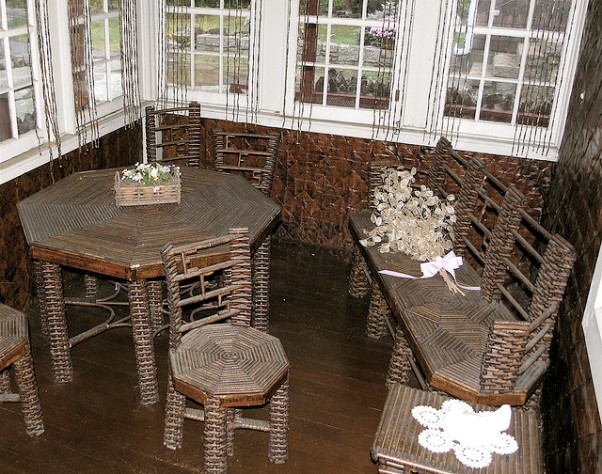
In 1922 a mechanical engineer, Elis Stenman, decided to craft a home with walls made of abandon newspapers held together by homemade glue instead of cement and bricks. The home situated in Rockport, Massachusetts, was later donated to his neighbor who gave large amount of newspapers for construction.


For most of us the worth of discarded newspaper is not more than occupying a space in home and or to sell it for recycling, it’s only the mind of an artist that can come up with ideas like this. In this paper house, everything except the roof and the floor was built using newspaper including furniture, a piano, clocks and other accessories. The invention required large amount of newspaper, luckily, people of the town donate large amount of old newspapers and they were equally excited about the experiment. By the support of natives the house was constructed in two years (1924). The house remained a resort for Elis and his wife for the summer season.


After the death of Elis, the house became a museum and his neighbor, Edna Beaudoin, took responsibility of preserving the masterpiece. He also opened this house for public visits and used to charge only 10 cents from every visitor.


 read more

 environment clean generations

Selasa, 20 September 2011

Soon We'll Have "Spare Parts" From Stem Cells


George Church, the geneticist behind the Personal Genome Project, is envisioning a package deal: get your genome sequenced, and he and his collaborators will develop a line of  induced pluripotent stem cells (IPS) from your tissue, so in the future, you’ll be able upgrade your system with organs and tissues bearing both your genes and special extras like genes from centenarians. It’s combining stem cells with  gene therapy. In an interview with Church, David Duncan-Erwin over at Technology Review asks him to elaborate. Why does he think this science fiction scenario is in our near future?

I don’t think people have fully appreciated how quickly adult stem cells and sequencing and synthetic biology have progressed. They have progressed by orders of magnitude since we got [induced pluripotent stem cells].

Let’s use stem cells in bone marrow as an example. They are easy to use and to get to work when you implant them in bone marrow. You might one day have three choices.
You can have bone marrow  from someone else that is matched to you, or  that is from you, or  bone marrow that is matched to you and comes to you, but is better than you. This better bone marrow might be [engineered to be] resistant to one virus, or to all viruses. It could have a bunch of alleles that you picked out of super centenarians, alleles that you have reason to believe are at least harmless and possibly helpful…And you will be able to do that for almost every stem cell population. Some of them are a little bit harder to replace, though.

IPS cells have already been used to grow an entire mouse from nearly scratch, he points out, and many crucial experiments have already been performed in rodents, so for human testing, “we’re talking about years, not decades,” he says. “It’s shorter than the Human Genome Project [which took 13 years], not less expensive, but definitely shorter.”
  
And how will this catch on? Here, Church shows that he understands the dynamics of translational medicine and the media very well:

The only way people are going to get this is through some brave soul. It will start with a sick person, and they will end up getting well, possibly more well than before they got sick. So you didn’t just correct the sickness, you actually did more. And they’ll give testimonials, and someone from the New York Times will interview them, and tell this appealing anecdote.

 by "environment clean generations"